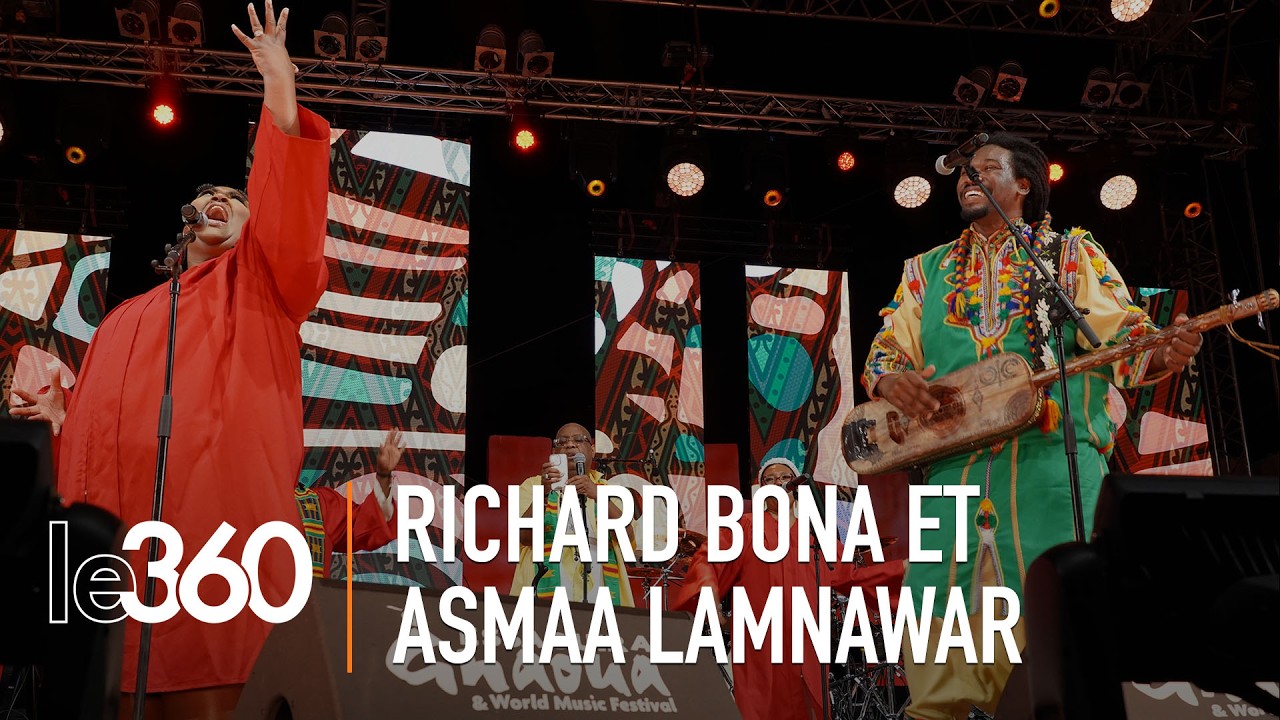
At the 2026 Gnaoua and World Music Festival, Khalil Mounji’s participation unfolded across parade, performance and transmission—a condensed expression of his commitment to living Gnawa heritage.
Essaouira as a living stage
The festival began in the streets. During the opening parade, music, movement, colour and collective memory crossed the medina and met the public directly. Khalil appeared in the first chapter of Habiller la Transe, his collaboration with designer Mao Lakhdar, turning the parade into a dialogue between ritual presence and contemporary Moroccan design.
The moment carried a simple idea: Gnawa heritage remains powerful because it is shared—not frozen. Its rhythms continue to live through bodies, communities and new generations.
Transmission through performance
The following day, Khalil joined Berklee College musicians, his koyos and jeddabs for a concert at the Former Danish Embassy. The encounter grew from listening and exchange, bringing international students into direct conversation with guembri, Gnawa rhythm and collective performance.
The concert also reflected the contribution of the people surrounding the project, including Adil Bouidi’s coordination and the musicians who helped transform the meeting into a genuine shared stage.
“Transmission is not a demonstration of the past. It is the moment when another musician listens, responds and becomes part of the conversation.”
Beyond one festival appearance
As President of Gnaoua Culture and Artistic Director of the Holland Gnawa Festival, Khalil Mounji works to extend these encounters beyond a single event. His practice connects preservation, documentation, education and artistic direction, building bridges between Morocco and international stages while keeping Gnawa artists and knowledge at the centre.
Essaouira 2026 brought these dimensions together: the public energy of the parade, the intimacy of collaboration and a commitment to ensuring that Gnawa heritage continues to be heard, understood and carried forward.