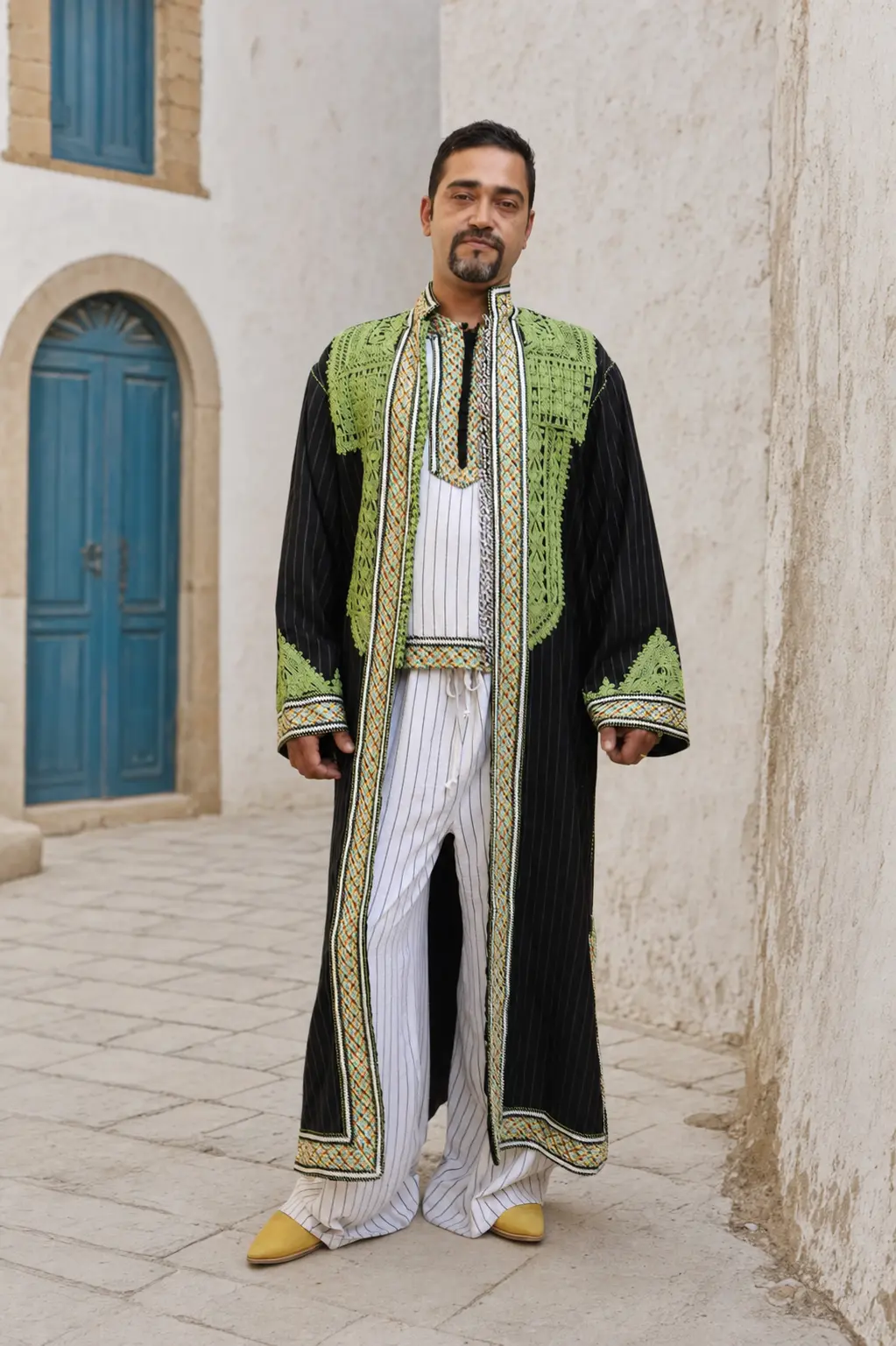
Moroccan designer Mao Lakhdar and Gnawa Maâlem Khalil Mounji imagine two complementary silhouettes: one made to cross the city with the parade, the other created to hold the intensity of the concert stage.
Two garments, one living language
Habiller la Transe begins with a simple idea: Gnawa music is not only heard. It is carried by the body. The textile follows the musician’s breath, amplifies the gesture and changes as the energy moves between the street and the stage.
Rather than reproducing a ceremonial costume, the collaboration translates its memory into a contemporary visual language. Braids, rhythm, colour and volume become a score in their own right.
Photo story · The concert garment
The Blue Parade
The first silhouette was conceived for the parade: open air, daylight, movement and a collective audience. Blue connects the garment to Essaouira—the Atlantic, the painted doors of the medina and the horizon that frames the festival—while giving the figure a clear presence inside the procession.
Its purpose is kinetic. The cut is read from a distance and comes alive through walking, turning and playing. It belongs to the public space: generous, celebratory and in dialogue with the crowd. Here, clothing becomes a moving signal, carrying Gnawa energy through the streets.
The Concert Garment
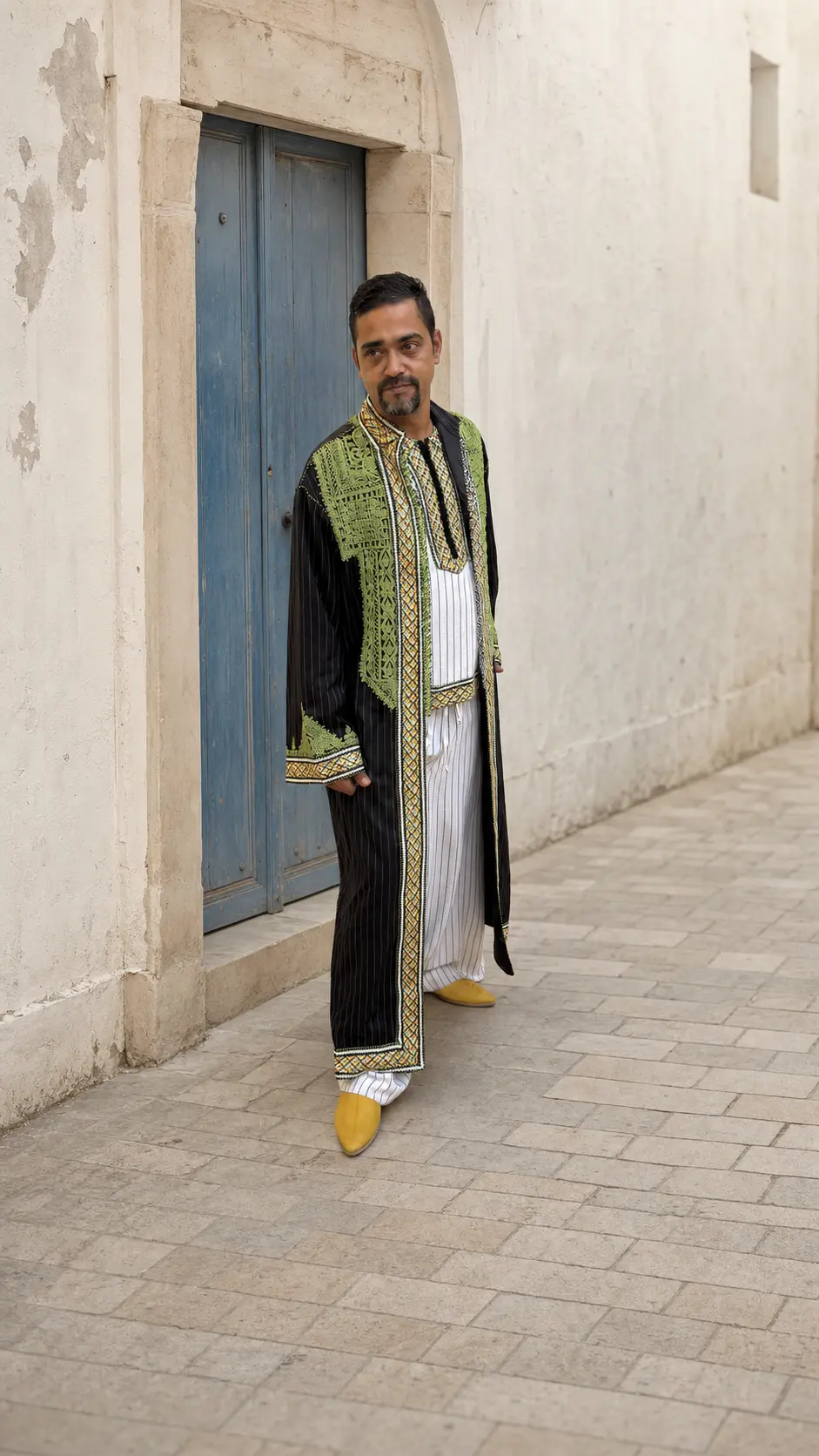
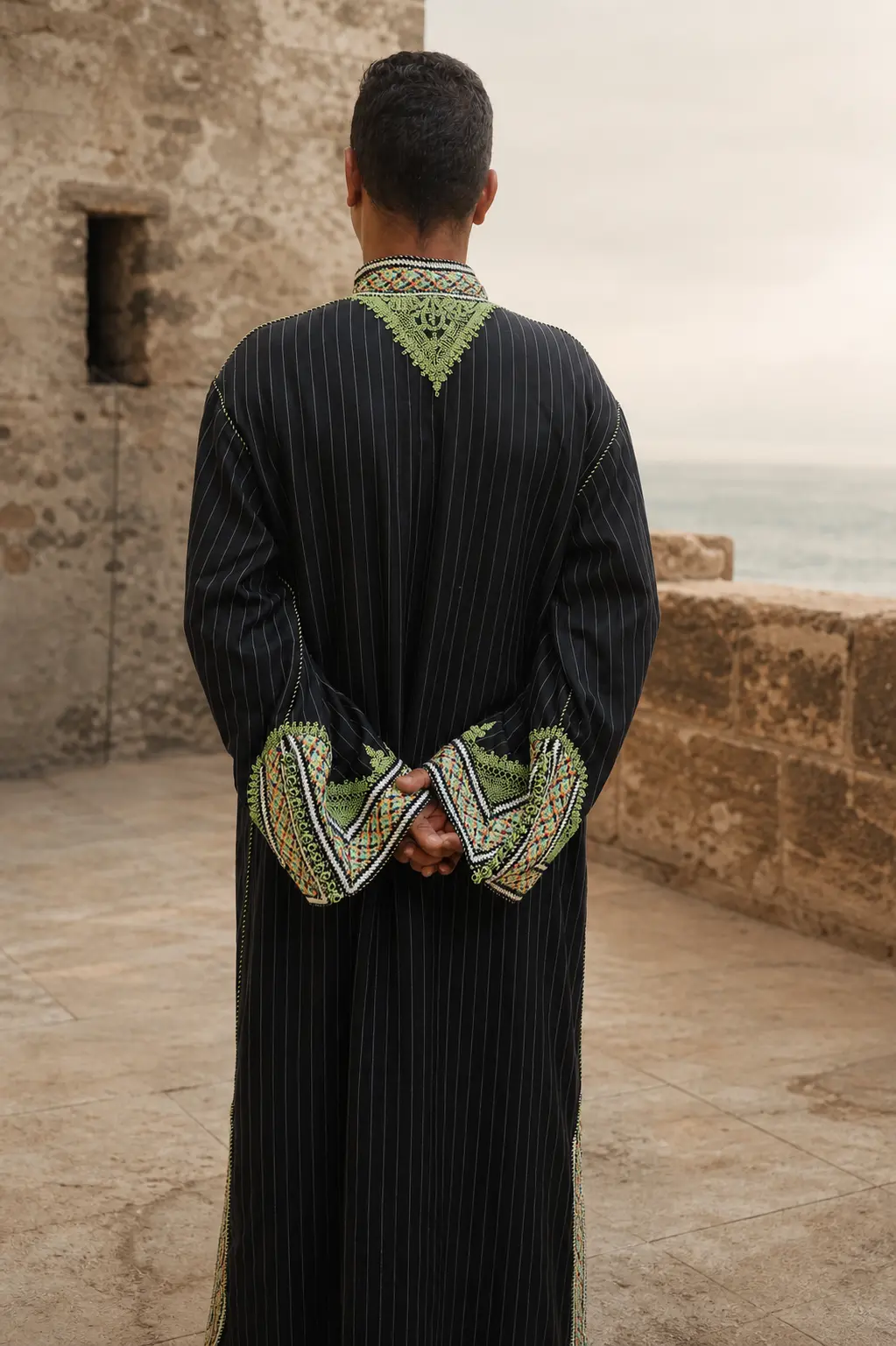
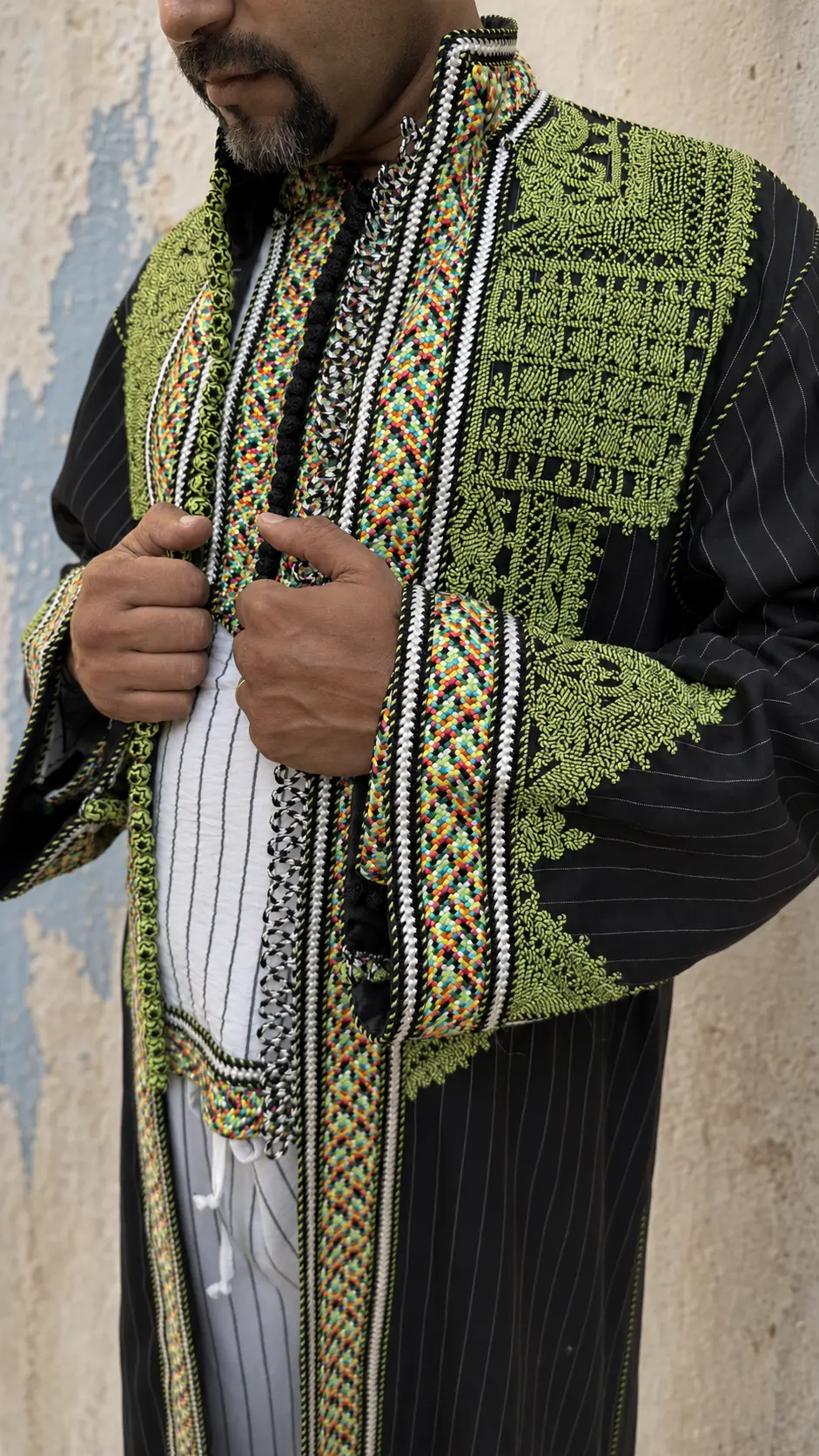
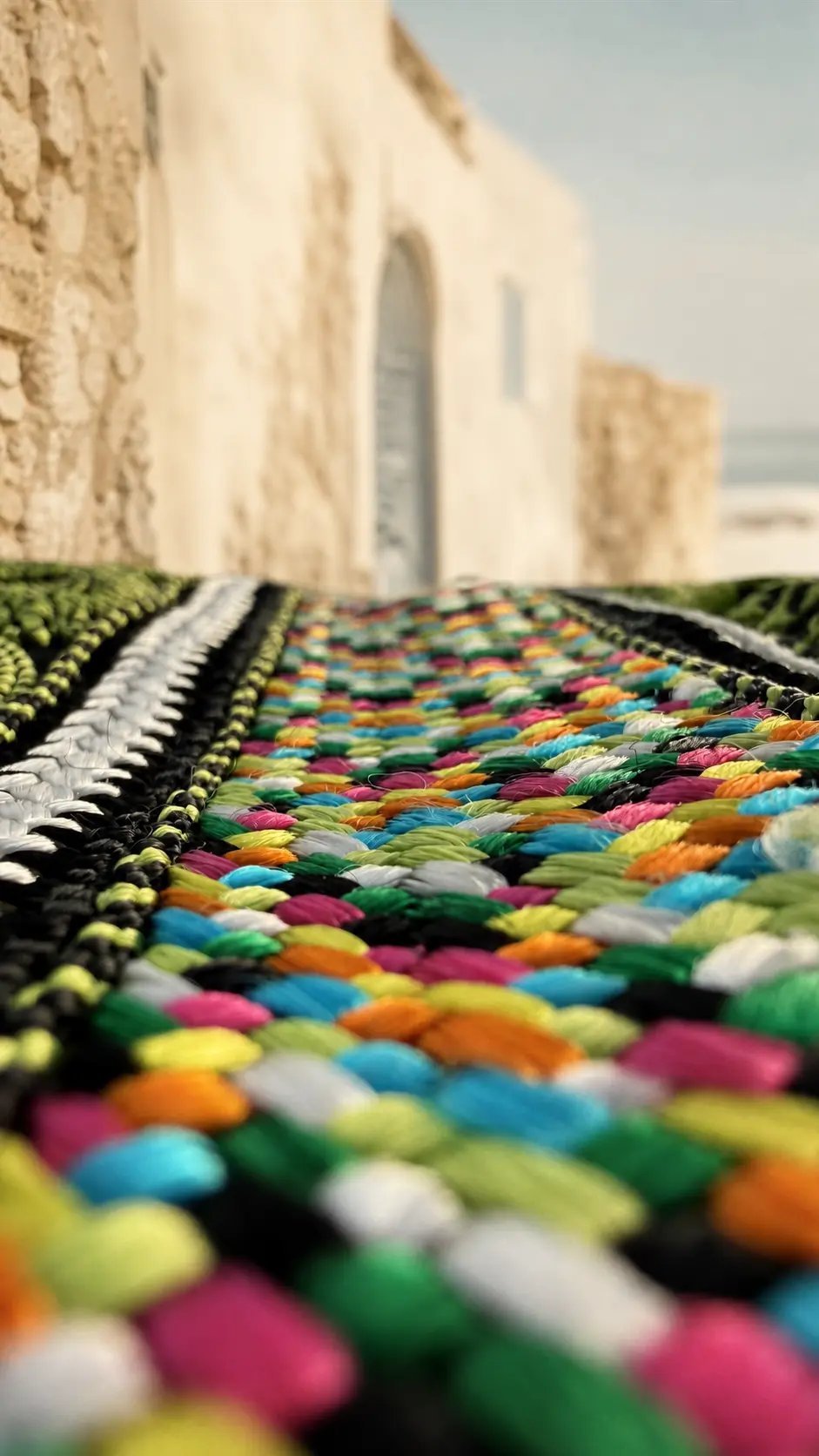
The second silhouette is built for another kind of intensity: the concentrated time of the concert. Its long black pinstriped robe creates a calm, architectural line, while vivid green embroidery and multicoloured braided bands catch the light around the face, hands and guembri.
Black evokes night, depth and the interior dimension of trance. Green introduces vitality and renewal. The white striped underlayer opens the silhouette, and the hand-worked details reward a closer gaze. On stage, the garment does not compete with the music; it frames the musician and makes every gesture legible.
“To Mao Lakhdar, for giving visible form to an invisible music. This first chapter is the beginning of a shared adventure.”
Preservation through creation
For Khalil Mounji, preserving Gnawa heritage also means giving its codes the space to meet new disciplines without losing their depth. Habiller la Transe opens that conversation between sound, textile, gesture and contemporary Moroccan identity.